
 By
By 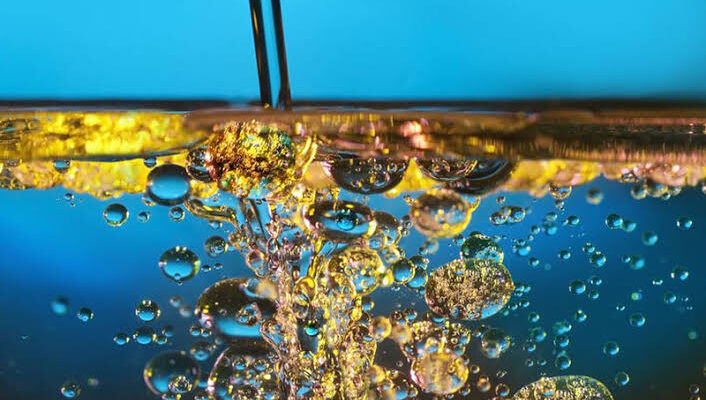
How does emulsification work?
Emulsification forces cannabinoid oil and water into a single stable mixture using mechanical energy plus a binding agent. Droplet size drops sharply during that process, often landing in the nanometre range.
Raw extract behaves stubbornly. Oil clusters drift together, settle, and resist any attempt at even spreading through a gel base. Equipment solves that problem by brute force. A high-pressure homogeniser pushes the blend through narrow channels, while ultrasonics shred oil by collapsing microscopic bubbles. Molecular surfactants park themselves along boundaries, keeping fragments separate after the machinery stops.
Anyone preparing to buy nano thc gummies online will notice specification sheets quoting droplet ranges and emulsifier types. Such figures reflect processing choices rather than promotional flourish. Batch consistency depends entirely upon that stabilisation step, because a collapsing emulsion leaves cannabinoid content pooled unevenly across a production tray.
Why does absorption change?
Surface area governs digestion speed. Splitting one large droplet into thousands of smaller ones multiplies the area exposed to bile salts and enzymes without adding a single milligram of material.
Conventional edibles lean heavily upon lymphatic transport, a route tied closely to dietary fat and gastric rhythm. Nano-scaled material sidesteps part of that dependency. Several things shift at once.
- Enzymes reach far more cannabinoid surface per second.
- Water compatibility loosens reliance upon a fatty meal.
- Even dispersion narrows the gap between one piece and the next.
- Stable suspension holds cannabinoid content evenly across a batch.
Reduced diameter also eases movement across intestinal membranes, though physiology still steers the outcome.
Droplet size control
Measurement usually happens through dynamic light scattering, which reports an average diameter alongside a spread value. Narrow spread signals disciplined processing. A broad one suggests portions of the batch never reached the target scale.
Typical targets sit below 100 nanometres, though published ranges vary by equipment and stabiliser selection. Nothing about that figure guarantees performance by itself. Formulators watch spreads closely because oversized outliers merge first during storage, and merging leads to separation. Texture enters the conversation, too. Heavier emulsifier loading can soften a gel matrix or dull its clarity, so recipe work becomes a balancing exercise between optical appeal, chew quality, and droplet stability.
Timing across servings
Onset for nano formulations tends to arrive earlier than oil-based counterparts. Metabolism, meal timing, and personal tolerance still move that window considerably. Two people can take identical servings and describe quite different arrival times.
Predictability deserves as much weight as speed. Knowing roughly when an effect settles allows sensible spacing between pieces instead of guesswork. Duration sometimes runs shorter, since quicker entry often pairs with a tighter overall curve. Uniform droplet distribution supports label accuracy, keeping each piece near its stated content, which removes one source of variation from any personal assessment. Notes kept across several sessions reveal a pattern far better than one isolated trial.
Nano emulsification sits closer to process engineering than marketing language. Particle scale, stabiliser selection, and distribution width shape how a gummy behaves once swallowed, and reading specifications with that in mind sets expectations on firmer ground.







Comments